How to fix receding gums?- gingival recession treatment
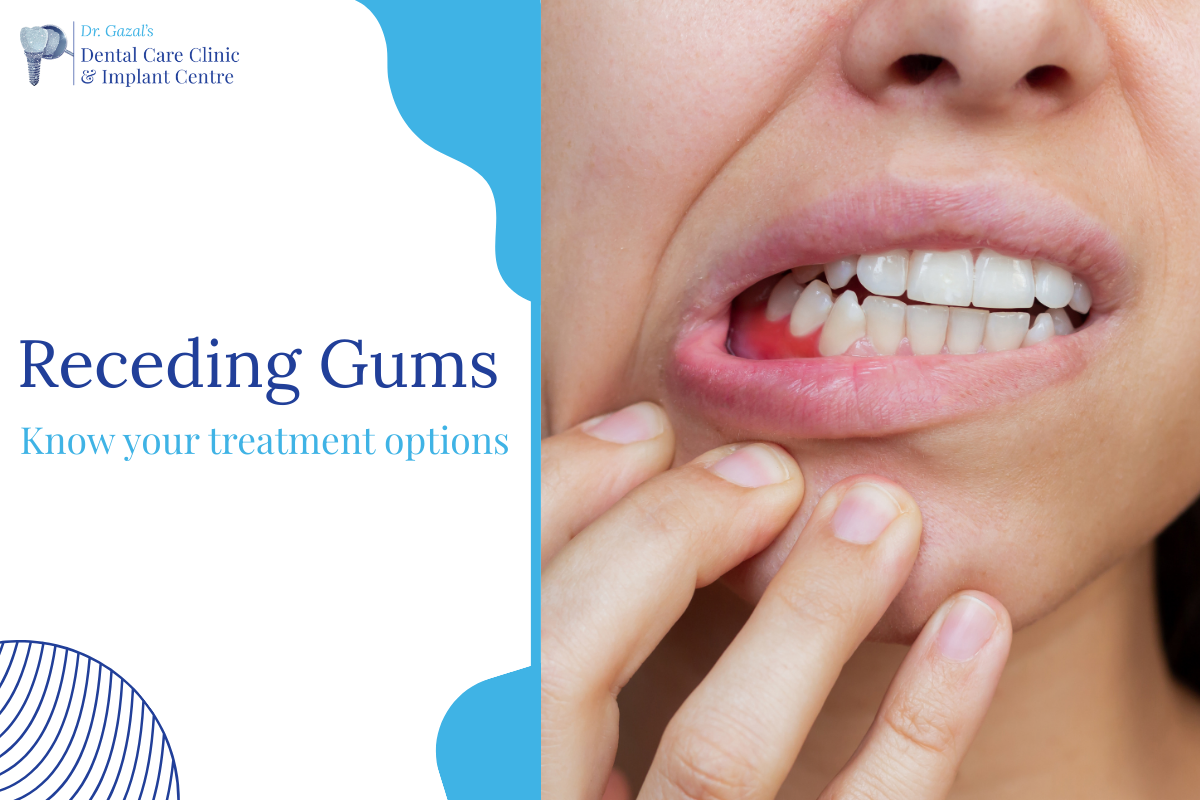
Receding gums are not only an aesthetic problem. They can also cause sensitivity in the exposed region. There is a chance of tooth decay at the exposed site. It is therefore essential to seek treatment for receding gums. If you have gum recession and are looking for treatment for receding gums, read the information below to learn more.
What is gum recession? – gingival recession treatment
Gum recession is a common dental health condition that often goes unnoticed. It is a condition where the gums pull back slowly from the root surface of the tooth. Exposure of the root surface can lead to sensitivity. The initial and most common sign of receding gums is root sensitivity.
When the gums pull back from their original position, a gap is created between the teeth and gums. There is a strong possibility of plaque buildup and tooth decay. There are various reasons for receding gums, and treatment depends on the root cause. If you are looking for gingival recession treatment, then it is best to get your complete
Causes of gum recession- Gingival recession treatment
Improper oral hygiene
Inability to maintain good oral hygiene will lead to plaque buildup. Plaque is a thin yellow layer that contains bacteria and food debris. It can not be removed with regular brushing. The plaque can turn into tartar if not removed in time.
Plaque and tartar deposits can cause gum problems, such as changes in the color and consistency of the gums. With time, the gums lose their attachment and recede from their original position.
Aggressive brushing
Horizontal tooth scrubbing with aggressive strokes is the most common technique used by people. It is not the proper way to brush and can damage both your teeth and gums. Use a soft-bristle toothbrush with correct technique for optimum results.
Learn the correct toothbrushing technique, as it is the most critical factor. Vigorous brushing with improper technique will do more damage than good.
Crooked teeth
Misaligned teeth put more pressure on teeth and gums. The extra stretch on the soft tissues will lead to loss of attachment.
Bruxism
Teeth clenching can not only damage your teeth but also add extra stress on the attachment tissues. This additional pressure can lead to gum recession.
Symptoms of gum recession- gingival recession treatment
- Bleeding during brushing or flossing
- Tooth Sensitivity
- Red and swollen gums
- Pain at the gum line
- Shrunken gums
- Exposed root surface of the teeth
Treatment options- receding gums treatment
There are both nonsurgical and surgical methods for treating gingival recession. It is essential to get your complete dental evaluation done to determine the best treatment option for your case.
Mild gingival recession cases involve slight detachment of the gums due to plaque and tartar deposits. Scaling and deep cleaning are effective in managing mild to moderate attachment issues. Root planing may also be required to clean the surface again for the reattachment of soft tissues.
Surgical treatment options are required for severe attachment loss. Open-flap surgery, soft-tissue grafting, and gum regeneration are among the surgical options available.
Bottom line
Gum recession is a common problem that can be effectively treated with timely intervention. If you have sensitive teeth, it can be due to root sensitivity caused by the receding gum line. It is not just an aesthetic problem but a functional issue. Book your appointment now to get the right solution.